 TireGeoCalc
285/75R16 in Inches: From Diameter to Circumference
Quick answer
Nominal geometry285/75R16 · nominal size-code geometry
- Overall diameter
- 32.83in
- Section width
- 11.22in
- Sidewall height
- 8.42in
Calculated from size markings. Not measured rolling dimensions or vehicle fitment approval.
Published
When you copy a diameter into another calculation, rounding can quietly change the result. The 285/75R16 table supplies both diameter and circumference so that you can read each directly from the same calculation. It shows an overall diameter of 32.83 inches and a circumference of 103.14 inches. The circumference was not created by treating that shortened diameter display as a fresh exact input. Understanding this distinction helps you preserve the meaning and precision of the table when preparing notes or comparing dimensions.
Nominal geometry for these tire sizes
The first size is the reference. Dimensions are nominal calculations, not measured rolling data or vehicle fitment approval.
| Tire size | Width (mm) | Width (in) | Sidewall (mm) | Sidewall (in) | Wheel (mm) | Wheel (in) | Diameter (mm) | Diameter (in) | Circumference (mm) | Circumference (in) | Revolutions / mile | Revolutions / km | Diameter change (%) |
|---|---|---|---|---|---|---|---|---|---|---|---|---|---|
| 285/75R16 | 285 | 11.22 | 213.8 | 8.42 | 406.4 | 16 | 833.9 | 32.83 | 2619.8 | 103.14 | 614.3 | 381.7 | 0 |
Nominal size-code geometry. Reference: 285/75R16. Display rounding only; not fitment approval.
- Tire size
- 285/75R16
- Width (mm)
- 285
- Width (in)
- 11.22
- Sidewall (mm)
- 213.8
- Sidewall (in)
- 8.42
- Wheel (mm)
- 406.4
- Wheel (in)
- 16
- Diameter (mm)
- 833.9
- Diameter (in)
- 32.83
- Circumference (mm)
- 2619.8
- Circumference (in)
- 103.14
- Revolutions / mile
- 614.3
- Revolutions / km
- 381.7
- Diameter change (%)
- 0
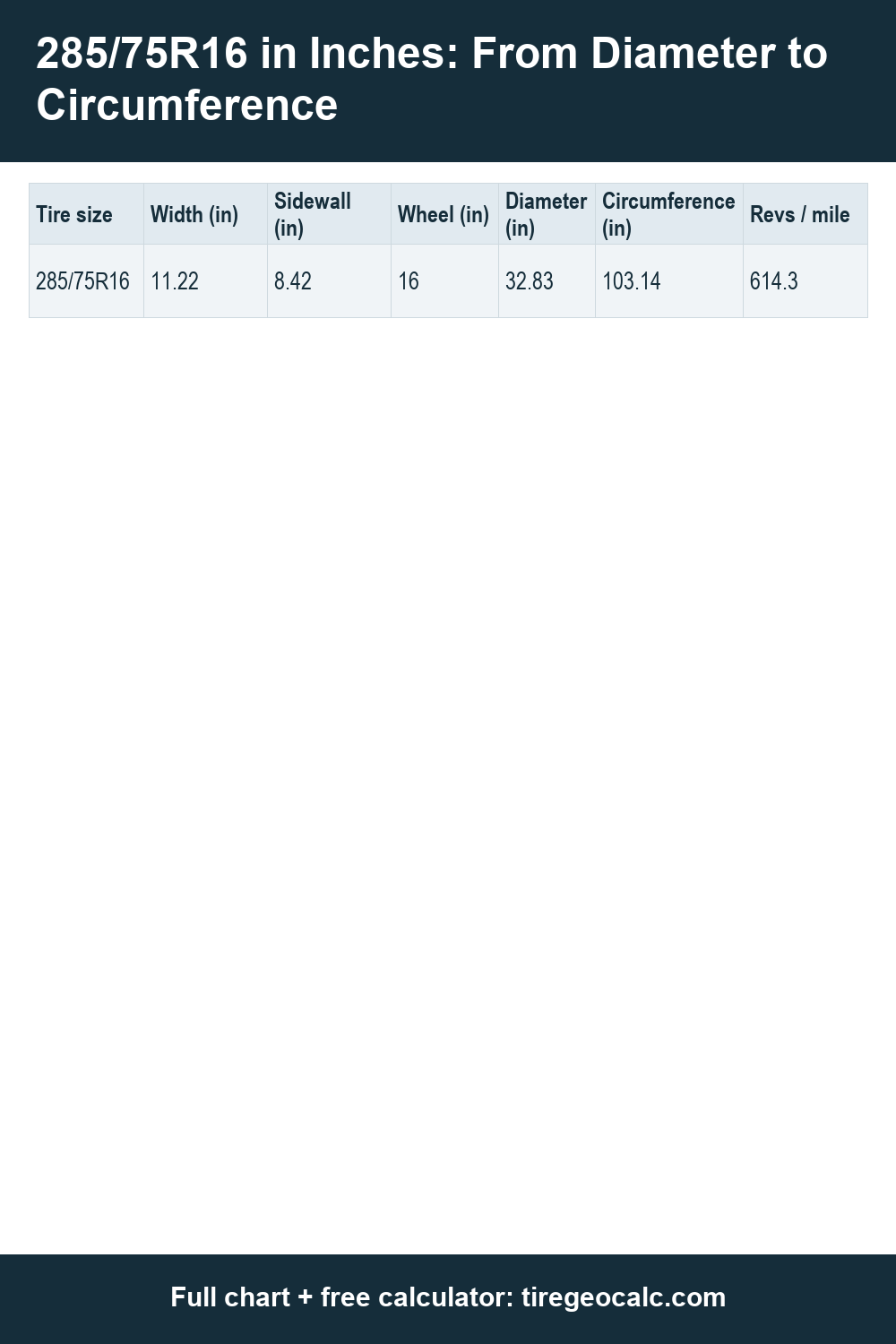
Calculated dimensions are nominal, not measured rolling dimensions or vehicle fitment approval.
Read the geometry before using a rounded value
The size 285/75R16 begins with nominal section width in millimeters. The following aspect ratio expresses sidewall height relative to width. R indicates radial construction, while the final part states wheel diameter in inches. The marking brings together different kinds of information, so a complete conversion must retain all of them.
Here the wheel diameter is 16 inches, also listed as 406.4 mm. Overall tire diameter extends beyond that wheel through the opposing sidewalls. Width runs across the tire instead, so its inch equivalent cannot stand in for overall height. Before copying a number, identify the dimension it belongs to and the unit used in that column. Precision is useful only when the measurement has been labeled correctly.
Follow the supplied example without intermediate rounding
Read the width as 285 mm, displayed as 11.22 inches. From width and aspect ratio, the sidewall entry is 213.8 mm, or 8.42 inches. The engine combines the wheel and opposing sidewalls at full precision to calculate an outside diameter of 833.9 mm. The inch presentation of that diameter is 32.83 inches.
The same underlying calculation gives a circumference of 2619.8 mm, or 103.14 inches. Dividing mile distance by the unrounded circumference with matching units then gives 614.3 nominal revolutions per mile. This sequence moves from width to sidewall to diameter, then around the circle and finally to a distance-based turn count. Read the final supplied entries rather than substituting rounded values midway through that sequence.
Understand why the circumference has its own entry
Diameter is a straight distance across the center of a circle; circumference is the distance around its edge. Circular geometry relates them through pi. That relationship belongs to the calculation, but the printed diameter has already been shortened for readability. Multiplying a rounded display by pi starts from less information than the engine retained.
A hand calculation can consequently show a small difference in the final digits without revealing an error in the supplied table. Repeated conversions between inches and millimeters can also carry earlier rounding into later steps. For a report or worksheet, copy circumference from its own column and identify it as nominal. Do not overwrite it with a number derived from an already rounded diameter.
Compare circles with a stated reference
When another size is considered, make the existing tire the reference and the proposed tire the candidate. Compare diameter with diameter or circumference with circumference in consistent units. A greater candidate diameter means a greater ideal circumference and fewer nominal turns over a fixed distance. A smaller candidate reverses that direction. No numerical comparison with an unspecified original tire is supplied here.
Those relationships describe nominal geometry, not measurements under load. The table does not contain a measured rolling circumference, and its revolutions figure is not an observed road result. A manufacturer's specification for the exact tire may differ from the calculated outline. Preserve the distinction between a product measurement and a size-code calculation even when their displayed values look close.
Pass accurate notes to the fitment review
A similar nominal diameter is not vehicle fitment approval. Vehicle documentation and exact tire and wheel specifications remain necessary to assess an application. A matching wheel diameter does not settle the permitted rim width, service requirements or clearance. Have those details checked together before treating a possible alternative as suitable for installation.
Nor can the table prescribe inflation pressure, determine load capacity or predict comfort and fuel consumption. Its purpose is to explain a geometric conversion with traceable values. Keep the full tire marking, dimension labels and units beside the copied figures. If you later obtain manufacturer measurements, record them separately with their source and conditions, so that neither kind of evidence is mistaken for the other.
Frequently asked questions
Why not calculate circumference from 32.83 inches?
That diameter has already been rounded for display. The supplied 103.14-inch circumference comes from the calculation before intermediate display rounding.
Does 8.42 inches describe the whole tire?
It is nominal sidewall height. Overall diameter also includes the wheel and the opposite sidewall.
What does the 614.3 entry describe?
It is calculated revolutions per mile based on the ideal circumference, with no claim of measured rolling travel under load.
How should I record a different manufacturer value?
Keep it alongside the nominal value with its source and measuring conditions. Do not silently substitute a product measurement for a code-based calculation.