 TireGeoCalc
205/50R17 in Inches: Width, Sidewall and Diameter
Quick answer
Nominal geometry205/50R17 · nominal size-code geometry
- Overall diameter
- 25.07in
- Section width
- 8.07in
- Sidewall height
- 4.04in
Calculated from size markings. Not measured rolling dimensions or vehicle fitment approval.
Published
Looking up 205/50R17 in inches can lead to several different answers because width, wheel diameter and total tire height describe different parts of the same shape. The calculated overall diameter is 25.07 inches, while the wheel marking remains 17 inches. Neither figure replaces the other. This guide follows the size from its printed code through the sidewall calculation to the complete circle. Use the resulting dimensions to understand a specification sheet or prepare a comparison, while keeping the original metric marking attached to the figures so another reader knows exactly what was calculated.
Nominal geometry for these tire sizes
The first size is the reference. Dimensions are nominal calculations, not measured rolling data or vehicle fitment approval.
| Tire size | Width (mm) | Width (in) | Sidewall (mm) | Sidewall (in) | Wheel (mm) | Wheel (in) | Diameter (mm) | Diameter (in) | Circumference (mm) | Circumference (in) | Revolutions / mile | Revolutions / km | Diameter change (%) |
|---|---|---|---|---|---|---|---|---|---|---|---|---|---|
| 205/50R17 | 205 | 8.07 | 102.5 | 4.04 | 431.8 | 17 | 636.8 | 25.07 | 2000.6 | 78.76 | 804.4 | 499.9 | 0 |
Nominal size-code geometry. Reference: 205/50R17. Display rounding only; not fitment approval.
- Tire size
- 205/50R17
- Width (mm)
- 205
- Width (in)
- 8.07
- Sidewall (mm)
- 102.5
- Sidewall (in)
- 4.04
- Wheel (mm)
- 431.8
- Wheel (in)
- 17
- Diameter (mm)
- 636.8
- Diameter (in)
- 25.07
- Circumference (mm)
- 2000.6
- Circumference (in)
- 78.76
- Revolutions / mile
- 804.4
- Revolutions / km
- 499.9
- Diameter change (%)
- 0
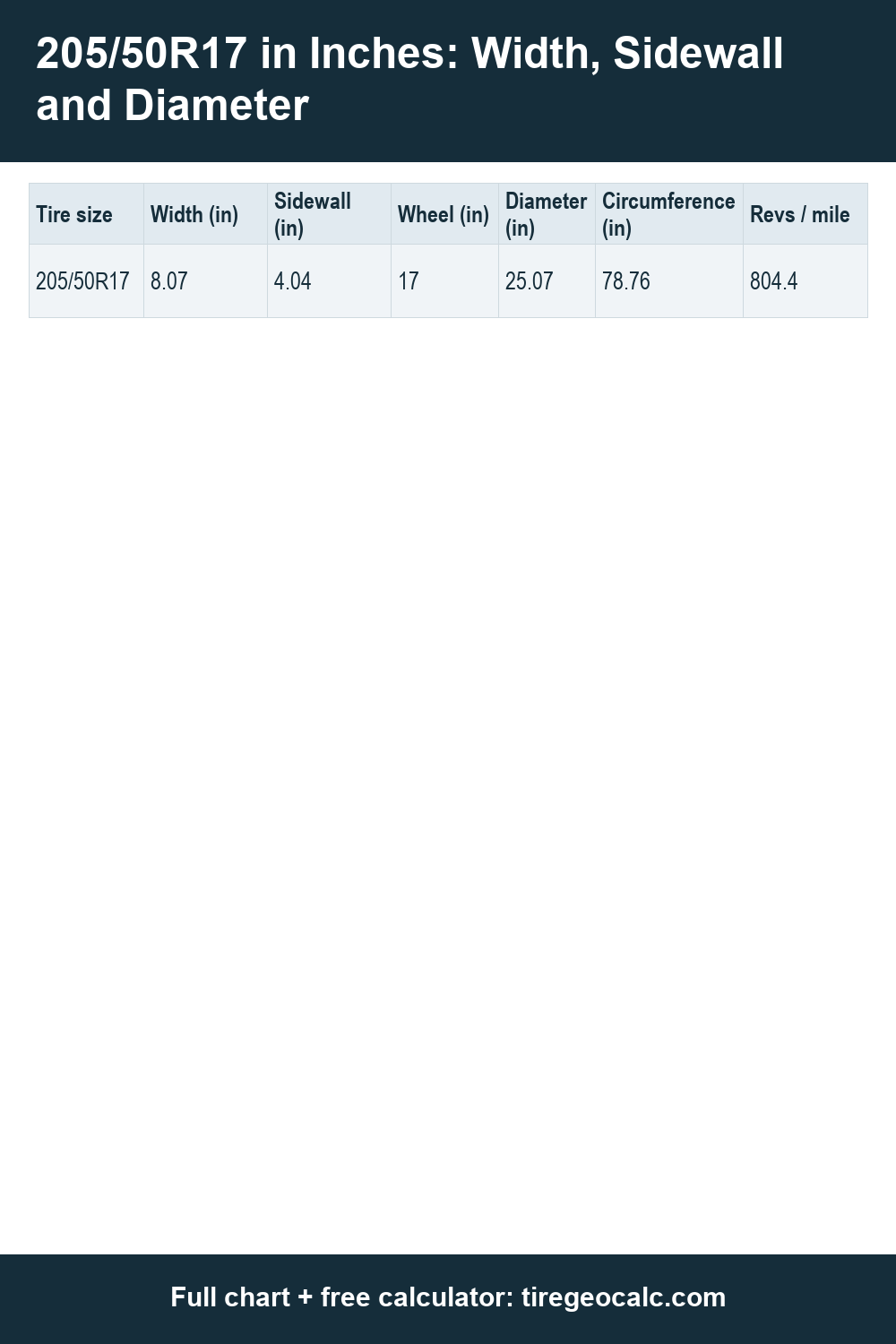
Calculated dimensions are nominal, not measured rolling dimensions or vehicle fitment approval.
Start with the width rather than the wheel
The first part of 205/50R17 describes a nominal section width of 205 mm, shown here as 8.07 inches. Section width concerns the width of the tire section; it is not a statement of tread contact width or the wheel width you should select. The middle number is an aspect ratio of 50 percent. It relates sidewall height to section width, so it cannot be read as a height in inches or millimeters. R identifies radial construction, and the closing 17 identifies wheel diameter in inches. Keeping those roles separate prevents the common mistake of treating the whole marking as a single system of units.
Build the height from the original metric values
For a worked example, multiply the section width by the aspect ratio expressed as a fraction to find one sidewall. Applied to 205/50R17, that gives the displayed sidewall height of 102.5 mm. Convert the wheel diameter to millimeters, giving 431.8 mm, and add the sidewall twice because the diameter crosses the rubber above and below the wheel. The resulting overall diameter is 636.8 mm. The inch column expresses that completed diameter as 25.07 inches. This calculation starts with the size code and preserves precision internally; it does not build a new answer by adding the rounded inch figures in the table.
Keep the sidewall conversion in its own column
The sidewall conversion is 4.04 inches, which describes only the nominal radial distance between the wheel diameter and the outside of the ideal tire circle. It is not the full tire height, a tread-depth value or a measurement of sidewall material thickness. When writing down this result, label it as sidewall height and retain the separate diameter value beside it. A drawing can help: imagine the wheel as the inner circle and the tire as the outer circle. The sidewall occupies the space between them on each side of a line through the center. This also explains why a sidewall value enters the diameter calculation twice.
Follow the circle around rather than across
Diameter measures across the circle; circumference follows its outside edge. Multiplying the unrounded diameter by pi produces the nominal circumference, displayed as 2000.6 mm or 78.76 inches for this size. These are alternate units for the same calculated path. Dividing a mile by that circumference, with matching units, produces 804.4 geometric revolutions per mile. A longer circumference would require fewer revolutions over the same distance. This page contains only the original size, however, so it does not calculate a speedometer change or compare another tire. Such a comparison needs a clearly identified reference size and a candidate calculated by the same method.
Allow the last displayed digit to be rounded
The millimeter and inch results are rounded for reading, which matters when you copy them into your own notes. Reversing the unit conversion from a short displayed value can produce a slightly different final digit from the original calculation. That does not establish a different tire size. Keep the printed code as the input and use fresh calculator results when you need another unit or a comparison. The figures describe nominal geometry, not measurements of a tire carrying a vehicle and not a measured rolling circumference. They therefore cannot show how a specific tire deforms at its contact patch or establish its actual rolling behavior.
Take the dimensions to the correct next check
A tire with dimensions close to these is not thereby approved for installation on your particular vehicle. Use the vehicle documentation and the exact tire specification to check the required size, service description and permitted wheel arrangement. Wheel width, offset and clearance are separate details that this conversion does not supply. If your purpose is to investigate a replacement, record the original axle specification before entering a candidate into the calculator. Keeping that reference prevents a neat inch figure from being mistaken for a fitment decision. The useful outcome here is a labeled set of dimensions and a clear calculation, ready to accompany the product and vehicle information.
Frequently asked questions
Which inch value describes the complete 205/50R17 tire?
The nominal overall diameter is 25.07 inches. The 17-inch marking describes the wheel diameter within that assembly, rather than the tire's outside height.
Does 8.07 inches specify the wheel width to buy?
That figure is the converted nominal tire section width. Obtain the permitted wheel-width range from the exact tire specification instead of treating section width as a wheel instruction.
Why is the sidewall listed separately as 4.04 inches?
A sidewall is a component of the diameter calculation. Listing it separately lets you distinguish the rubber-height contribution from the wheel diameter without confusing either with overall height.
Can these dimensions tell me my current instrument error?
They cannot measure an instrument reading. A theoretical size-change calculation also needs the original calibration reference and the candidate size, and remains distinct from a measurement on the vehicle.
Continue your comparison
Verified against manufacturer data
Published specifications for the named models, checked on the dates below. Differences mean published minus calculated, divided by calculated. These are examples, not specifications for every tire of this size. P, LT and XL designations remain in the source row; matching nominal dimensions does not make their load capacities interchangeable.
| Size / model | Calculated diameter | Published diameter | Difference | Revolutions per mile: calculated / published (difference) | Source / checked |
|---|---|---|---|---|---|
| 205/50R17XL93V ToyoExtensa A/S II (148610) | 25.07 in | 25.10 in | +0.12% | 804.4 / not recorded in rev/mile | Toyo specifications |
| 205/50 R 1793V XL General TireAltiMAX RT45 (15577290000) | 25.07 in | 25.10 in | +0.12% | 804.4 / 829 (+3.05%) | General Tire specifications |
How we calculate: nominal geometry and measured rolling data can differ. This comparison is not vehicle fitment approval.