 TireGeoCalc
Best Gear Ratio for 35-Inch Tires: Compare the Math First
Published
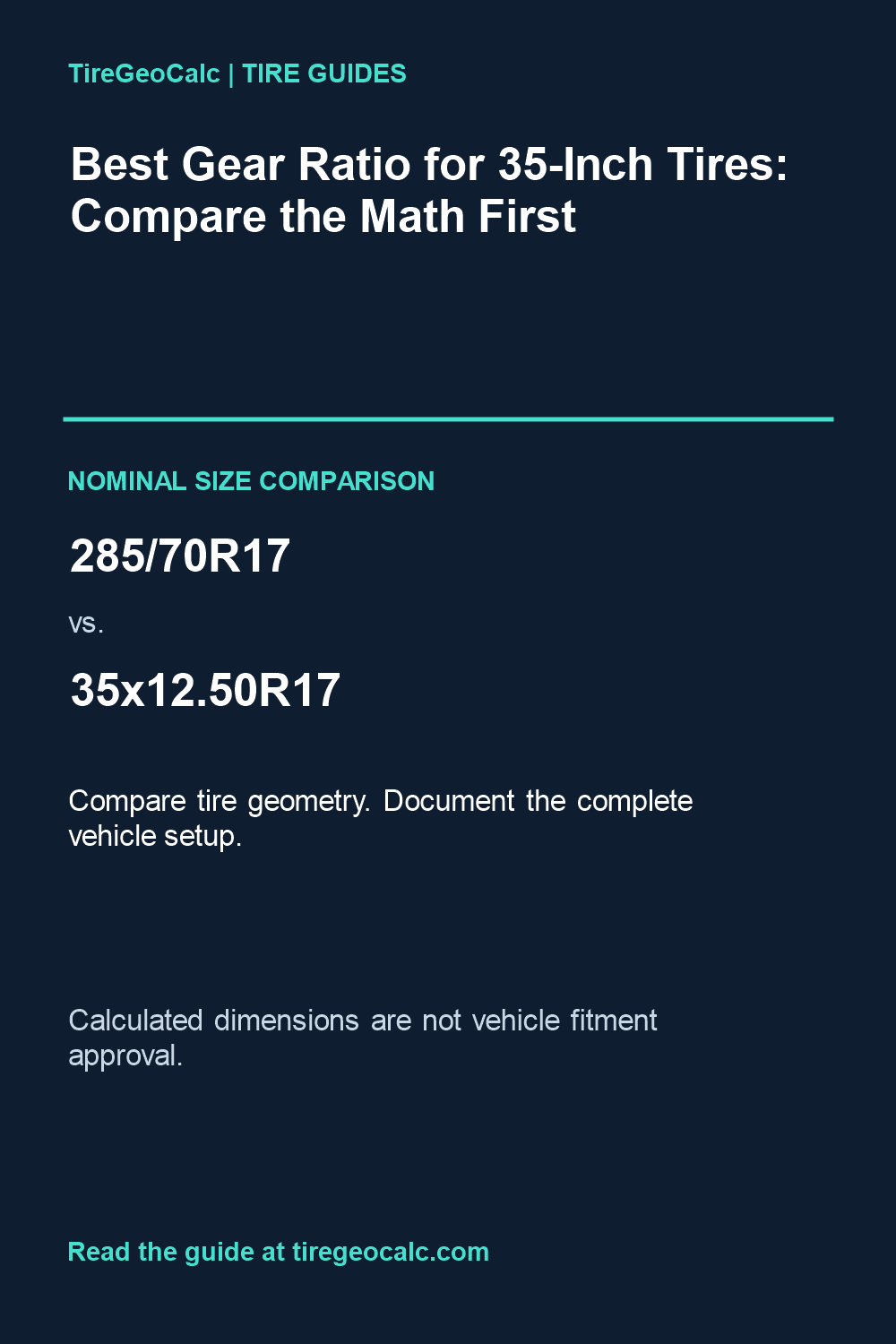
There is no universally best axle ratio for nominal 35-inch tires in the supplied geometry data. Start by comparing tire diameter and rotation, then apply clearly stated drivetrain assumptions. This guide uses 285/70R17 as an illustrative reference and 35x12.50R17 as a candidate. The axle ratios are hypothetical inputs from the topic list, not recommendations or claims about factory equipment.
Nominal tire dimensions
The first size is the original reference. Values come from the tire geometry engine and are rounded only for display.
| Size | Width (in) | Sidewall (in) | Diameter (in) | Diameter (mm) | Circumference (mm) | Geometric rev/mile |
|---|---|---|---|---|---|---|
| 285/70R17 | 11.22 | 7.85 | 32.71 | 830.8 | 2610.0 | 616.6 |
| 35x12.50R17 | 12.50 | 9.00 | 35.00 | 889.0 | 2792.9 | 576.2 |
Calculated nominal dimensions, not measured rolling data or fitment approval.
- Size
- 285/70R17
- Width (in)
- 11.22
- Sidewall (in)
- 7.85
- Diameter (in)
- 32.71
- Diameter (mm)
- 830.8
- Circumference (mm)
- 2610.0
- Geometric rev/mile
- 616.6
- Size
- 35x12.50R17
- Width (in)
- 12.50
- Sidewall (in)
- 9.00
- Diameter (in)
- 35.00
- Diameter (mm)
- 889.0
- Circumference (mm)
- 2792.9
- Geometric rev/mile
- 576.2
Candidate minus original: diameter 58.2 mm (7.01%); nominal radius 29.1 mm. Radius change is not a measured clearance gain.
| Indicated mph | Calculated actual mph |
|---|---|
| 30 | 32.10 |
| 60 | 64.20 |
| 75 | 80.25 |
Original calibration assumed; theoretical actual mph for the candidate.
- Indicated mph
- 30
- Calculated actual mph
- 32.10
- Indicated mph
- 60
- Calculated actual mph
- 64.20
- Indicated mph
- 75
- Calculated actual mph
- 80.25
Hypothetical axle-ratio comparison
Assumptions: nominal 35x12.50R17 candidate, 65 mph, 1:1 transmission ratio, no slip. Ratios are illustrative inputs, not factory specifications. RPM = geometric revolutions per mile × mph / 60 × axle ratio × transmission ratio.
| Axle ratio | Engine RPM | Effective ratio |
|---|---|---|
| 3.73 | 2328 | 3.49 |
| 4.10 | 2559 | 3.83 |
| 4.56 | 2847 | 4.26 |
Calculated engine RPM and effective ratio relative to the 285/70R17 reference.
- Axle ratio
- 3.73
- Engine RPM
- 2328
- Effective ratio
- 3.49
- Axle ratio
- 4.10
- Engine RPM
- 2559
- Effective ratio
- 3.83
- Axle ratio
- 4.56
- Engine RPM
- 2847
- Effective ratio
- 4.26
For hypothetical original ratio 3.73, the mathematical restoration target is 3.99. This is not an available-product or installation recommendation.
Separate wheel rotation from engine rotation
The tire engine calculates geometric revolutions per mile from nominal circumference. Multiply that figure by road speed in miles per hour and divide by minutes per hour to obtain wheel revolutions per minute. This stage needs tire dimensions and road speed. It does not yet describe engine speed because no axle or transmission relationship has been applied.
The engine-speed example multiplies wheel rotation by axle ratio and assumes a direct transmission ratio with no slip. Those assumptions are stated with the table to distinguish the example from a prediction for an unidentified vehicle. The calculation does not identify the selected transmission gear, control strategy or measured rolling circumference. Use actual drivetrain information for a relevant comparison.
Hold tire diameter constant across the ratio choices
The ratio table holds candidate tire and road speed constant while changing only the hypothetical axle ratio. Read down the engine-speed column to see the consequence of that single input. It is an arithmetic comparison rather than a ranking of gear sets. No fuel-economy, acceleration or towing result is inferred from the calculated rotation figures.
A numerically higher axle ratio multiplies the same wheel rotation by a larger number in this model. Whether that relationship suits a vehicle requires information absent from the table. Keep transmission ratios, intended use and manufacturer requirements with the research. Avoid choosing gears simply because one row produces an appealing engine-speed number under these hypothetical assumptions.
State the reference when calculating effective ratio
Multiply axle ratio by reference diameter divided by candidate diameter to express effective ratio relative to the reference tire. This does not describe a physical change to the gears. It separates the nominal effect of a larger tire circle from a proposed axle-ratio change. The reference must remain visible for the effective-ratio number to be meaningful.
To restore the original example relationship arithmetically, multiply original axle ratio by candidate diameter divided by original diameter. The displayed target is a mathematical value, not evidence that a matching gear set exists or is suitable. Use your actual original tire and ratio rather than reusing the example target without checking the inputs that produced it.
Document assumptions before selecting hardware
The flotation input supplies nominal overall diameter; the metric reference derives diameter from width, aspect ratio and wheel diameter. Exact tire models may have published measurements that differ from nominal geometry. Measured rolling data is a separate input. Keep these distinctions visible when discussing calculated results with a drivetrain installer, particularly when comparing numbers from different sources.
Gather the vehicle configuration, original tire specification, current axle ratio and relevant transmission information. Add exact candidate tire data and intended use. Ask a qualified installer to assess the proposed setup against applicable requirements and identify compatibility questions. This page cannot inspect a drivetrain or approve parts from nominal diameter. The tire searches below are research links, not recommendations for axle gears.
Keep product requirements separate from geometry
Check the exact tire and wheel documentation against vehicle requirements, including load and speed specifications. This geometry table cannot prescribe inflation pressure, certify carrying capacity or predict behavior of the completed setup. Keep those questions with the relevant manufacturer information and installation assessment. Nominal dimensions are one input to the decision, not a substitute for the other requirements.
Shopping results may contain different tire models and specifications under similar labels. Verify the exact item and its documentation before considering a purchase. The links here are searches for research, not approved packages. Keep unresolved inputs labeled rather than filling them with guesses, and retain complete specifications so another person can review the same intended combination.
Frequently asked questions
Is 4.56 always best for 35s?
No. The table compares arithmetic inputs and does not recommend an axle ratio for a vehicle.
Does this predict my highway engine speed?
Only under the hypothetical transmission and no-slip assumptions; actual drivetrain and tire data are required.
Is the restoration target a gear-set recommendation?
No. It is a mathematical target relative to the stated reference, not a product or compatibility claim.
Continue your research
Research tire products
As an Amazon Associate, TireGeoCalc earns from qualifying purchases. Search results are not fitment approval.
Nominal geometry does not establish vehicle fitment. Check the exact tire, wheel and vehicle documentation before installation.