 TireGeoCalc
225/75R16 in Inches: Size and Nearby Alternatives
Quick answer
Nominal geometry225/75R16 · nominal size-code geometry
- Overall diameter
- 29.29in
- Section width
- 8.86in
- Sidewall height
- 6.64in
Calculated from size markings. Not measured rolling dimensions or vehicle fitment approval.
Published
225/75R16 is a tall sidewall size format relevant to commercial van and light truck searches. Its inch conversion is helpful, but the bare dimensions are particularly easy to overinterpret in a working vehicle context. Passenger, commercial and light truck markings can carry requirements that the geometric code does not describe. The table converts nominal shape while keeping those construction and carrying questions open.
Calculated dimensions and changes from the original tire
The first row, 225/75R16, is the original reference. All dimensions come from the tire geometry engine. Candidate percentages and speed results use that same original; figures are rounded only for display.
| Tire size | Width (mm) | Width (in) | Sidewall (mm) | Sidewall (in) | Wheel (mm) | Wheel (in) | Diameter (mm) | Diameter (in) | Circumference (mm) | Circumference (in) | Revolutions / mile | Revolutions / km | Diameter change (%) |
|---|---|---|---|---|---|---|---|---|---|---|---|---|---|
| 225/75R16 | 225 | 8.86 | 168.8 | 6.64 | 406.4 | 16 | 743.9 | 29.29 | 2337 | 92.01 | 688.6 | 427.9 | 0 |
| 215/80R16 | 215 | 8.46 | 172 | 6.77 | 406.4 | 16 | 750.4 | 29.54 | 2357.5 | 92.81 | 682.7 | 424.2 | 0.87 |
| 235/70R16 | 235 | 9.25 | 164.5 | 6.48 | 406.4 | 16 | 735.4 | 28.95 | 2310.3 | 90.96 | 696.6 | 432.8 | -1.14 |
Nominal size-code geometry. Reference: 225/75R16. Display rounding only; not fitment approval.
- Tire size
- 225/75R16
- Width (mm)
- 225
- Width (in)
- 8.86
- Sidewall (mm)
- 168.8
- Sidewall (in)
- 6.64
- Wheel (mm)
- 406.4
- Wheel (in)
- 16
- Diameter (mm)
- 743.9
- Diameter (in)
- 29.29
- Circumference (mm)
- 2337
- Circumference (in)
- 92.01
- Revolutions / mile
- 688.6
- Revolutions / km
- 427.9
- Diameter change (%)
- 0
- Tire size
- 215/80R16
- Width (mm)
- 215
- Width (in)
- 8.46
- Sidewall (mm)
- 172
- Sidewall (in)
- 6.77
- Wheel (mm)
- 406.4
- Wheel (in)
- 16
- Diameter (mm)
- 750.4
- Diameter (in)
- 29.54
- Circumference (mm)
- 2357.5
- Circumference (in)
- 92.81
- Revolutions / mile
- 682.7
- Revolutions / km
- 424.2
- Diameter change (%)
- 0.87
- Tire size
- 235/70R16
- Width (mm)
- 235
- Width (in)
- 9.25
- Sidewall (mm)
- 164.5
- Sidewall (in)
- 6.48
- Wheel (mm)
- 406.4
- Wheel (in)
- 16
- Diameter (mm)
- 735.4
- Diameter (in)
- 28.95
- Circumference (mm)
- 2310.3
- Circumference (in)
- 90.96
- Revolutions / mile
- 696.6
- Revolutions / km
- 432.8
- Diameter change (%)
- -1.14
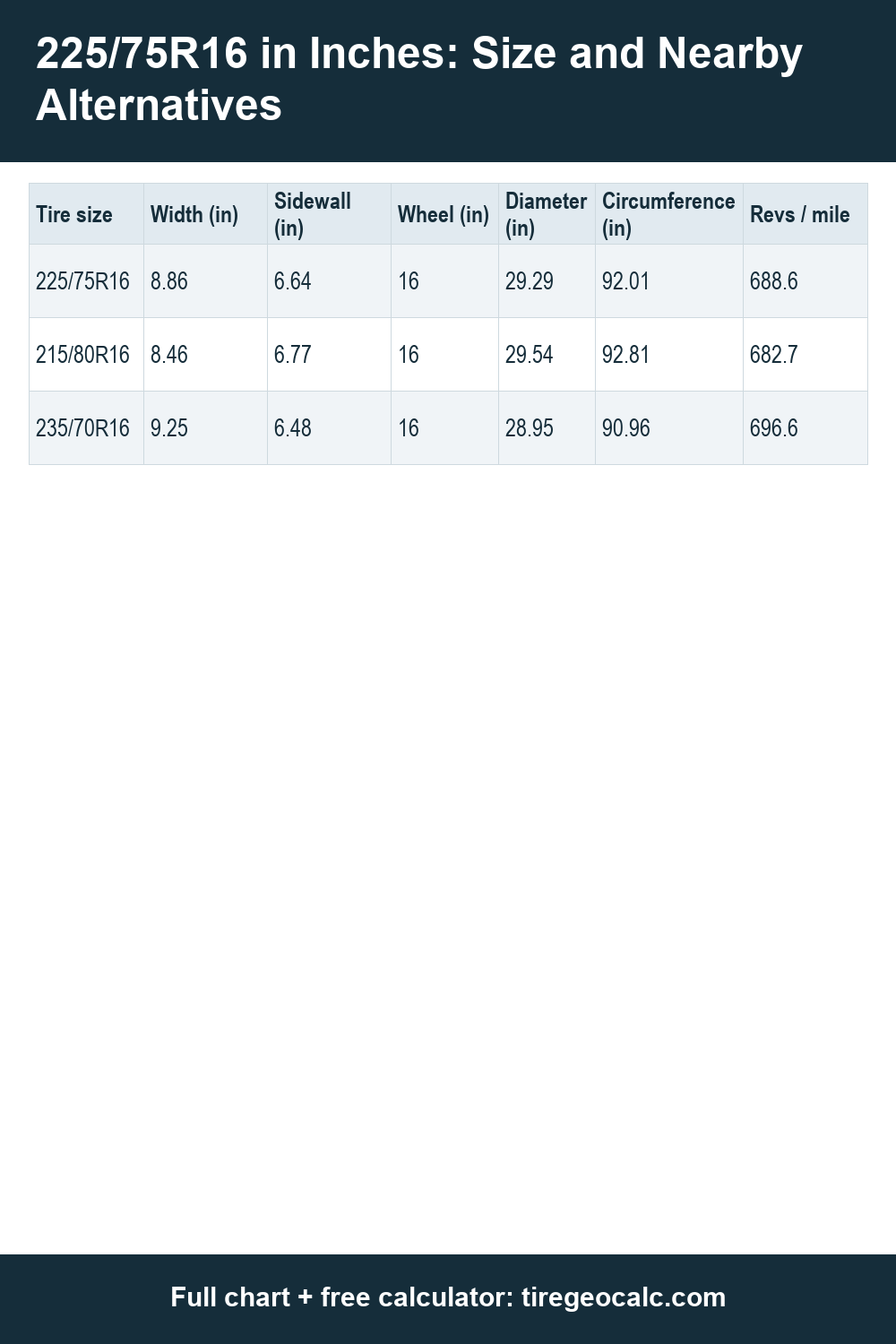
Calculated 225/75R16 dimensions, not a rounded label
The reference calculates to 29.29 inches in outside diameter and 8.86 inches in nominal section width. One geometric sidewall is 6.64 inches, surrounding a 16 inch bead seat diameter. These values come from the size formula, not from measuring a tire or copying a product listing. The complete marking remains the identifier even if someone describes its height using a rounded inch number.
For this reference, nominal circumference is 92.01 inches, giving 688.63 geometric revolutions per mile. Circumference is diameter multiplied by pi; revolutions divide the distance by that circumference. These related results describe an ideal circle. They are not separate road tests and should not be mistaken for manufacturer measured rolling data under load.
Commercial van searches where construction must stay visible
For a van, delivery vehicle or light truck, copy the whole tire marking before converting anything. A prefix, suffix or service description can be essential to the specified application. The table deliberately uses the geometric portion only; it does not equate differently marked products. A tire with the right outer height is not automatically appropriate for a loaded vehicle, a motorhome conversion or a particular axle arrangement.
215/80R16 is narrower with a greater sidewall ratio. 235/70R16 is wider with a smaller ratio. They provide useful shape comparisons on the same wheel opening. Their proximity in the table is not evidence of equivalent carrying capacity. Check the actual tire model and construction before considering either. If the application has dual rear wheels, the relevant spacing and service information also lie outside the single tire geometry.
Read the nearby sizes against the original row
The first row is 225/75R16, and every comparison row uses it as the original. The table calculates the nearby alternatives rather than treating them as equivalent products. Read the sign of diameter change from that fixed baseline. A taller candidate has a larger ideal radius; the ideal radius difference is half the diameter difference, not the full change in tire height. Confirm the exact product dimensions if a small clearance margin matters.
Nominal geometry does not contain tire deflection, tread wear or a measured rolling radius. A loaded tire can behave differently from the ideal circle, and the same size code can appear on products with different measured dimensions. Keep the source and measurement definition with every number used in a precise comparison. Where actual calibration or loaded clearance is the question, use appropriate product or measured evidence alongside this dimensional starting point.
Assess this particular size search
A converted section width is not enough to assess dual wheel spacing. Wheel arrangement, product dimensions and the manufacturer's requirements are needed. Likewise, a light truck tire's capacity at specified conditions cannot be inferred from overall diameter. Keep the loading assessment separate and retain the approved pressure guidance. The sidewall maximum marking should not be substituted for the vehicle's operating instruction merely because the tire is tall.
A working vehicle record should include the axle, documented original, exact product, service description and wheel information. Add the inch dimensions after those identifiers. That structure makes later inspections more useful and prevents a generic geometric neighbor from becoming an undocumented substitution. When the vehicle's use has changed, such as a conversion that adds permanent equipment, resolve the actual loading and equipment requirements before shopping by dimensions alone.
Frequently asked questions
Does the same geometric size mean commercial and passenger products are equivalent?
No. Construction, service markings, load information and operating requirements must be checked for the exact application. The table describes shape and cannot establish equivalent carrying capability or suitability for a van axle.
Are the 225/75R16 alternatives approved replacements?
No. They are nearby geometric examples on the same nominal wheel diameter. Check the specific vehicle, wheel, service description and product information before treating any candidate as a replacement.
Which 225/75R16 measurement should I use for a product comparison?
Match the measurement definition to the question. Nominal diameter describes size code geometry; the exact manufacturer outside diameter describes a product under stated measuring conditions; rolling information addresses distance under its own conditions. Keep them labeled rather than substituting one for another.
Continue your comparison
These are nominal geometric calculations, not vehicle fitment approval. Check the vehicle manual and exact tire and wheel specifications, including load and speed ratings, approved rim width and clearance; consult the manual for any diameter change exceeding 3%.
Reference tables: Load index chart and Speed rating chart.