 TireGeoCalc
225/55R19 in Inches: Diameter, Width and Sidewall
Quick answer
Nominal geometry225/55R19 · nominal size-code geometry
- Overall diameter
- 28.74in
- Section width
- 8.86in
- Sidewall height
- 4.87in
Calculated from size markings. Not measured rolling dimensions or vehicle fitment approval.
Published
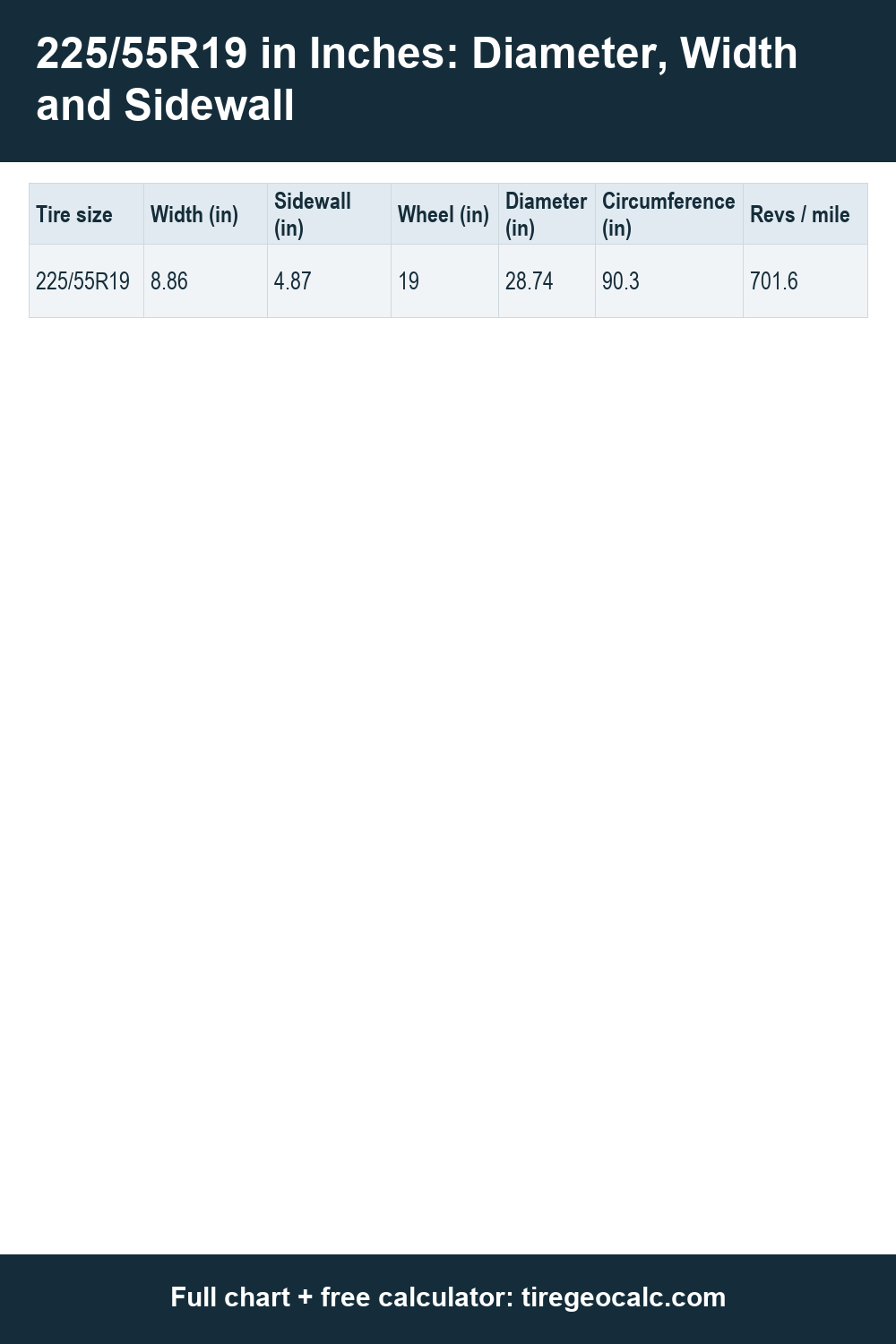
225/55R19 in inches means converting the complete tire dimensions, not treating the wheel number as the height of the tire. The table below separates overall diameter, section width, sidewall height and wheel diameter. All measurements are calculated from the size marking by the same geometry engine used in the calculator. This page keeps 225/55R19 as its own reference, so the change column is zero. Use the inch and millimeter columns together when comparing a product specification or discussing a replacement with an installer.
Calculated tire dimensions in millimeters and inches
All figures are computed from the complete size codes. The first row is the original reference. Rounding is for display only; these are not measured rolling specifications.
| Tire size | Width (mm) | Width (in) | Sidewall (mm) | Sidewall (in) | Wheel (mm) | Wheel (in) | Diameter (mm) | Diameter (in) | Circumference (mm) | Circumference (in) | Revolutions / mile | Revolutions / km | Diameter change (%) |
|---|---|---|---|---|---|---|---|---|---|---|---|---|---|
| 225/55R19 | 225 | 8.86 | 123.8 | 4.87 | 482.6 | 19 | 730.1 | 28.74 | 2293.7 | 90.3 | 701.6 | 436 | 0 |
Nominal size-code geometry. Reference: 225/55R19. Display rounding only; not fitment approval.
- Tire size
- 225/55R19
- Width (mm)
- 225
- Width (in)
- 8.86
- Sidewall (mm)
- 123.8
- Sidewall (in)
- 4.87
- Wheel (mm)
- 482.6
- Wheel (in)
- 19
- Diameter (mm)
- 730.1
- Diameter (in)
- 28.74
- Circumference (mm)
- 2293.7
- Circumference (in)
- 90.3
- Revolutions / mile
- 701.6
- Revolutions / km
- 436
- Diameter change (%)
- 0
Read the 225/55R19 marking before converting
The first part of 225/55R19 gives a nominal section width of 225 millimeters. The middle number, 55, expresses sidewall height as a percentage of that width. R identifies radial construction, and 19 is the wheel diameter in inches at the bead seat. These numbers use different units and describe different parts of the assembly. Reading all three parts prevents the wheel diameter from being mistaken for the outer tire diameter.
For this size, calculate one sidewall by multiplying 225 by 55 and dividing by one hundred. Convert the wheel diameter to millimeters, then add two sidewalls. Finally divide the overall diameter by the millimeters in one inch. The table performs those operations using full precision and rounds only the displayed result. It does not copy dimensions from a particular tire brand.
Distinguish height, width and the wheel opening
Overall diameter spans the tire through its center from one outer edge to the opposite edge. Section width runs across the tire and describes the nominal distance between its sidewalls. Neither value is a measurement of the tread contact patch. Sidewall height is a radial distance between the wheel and the tire exterior in the ideal model; it contributes twice to the overall diameter.
The 19-inch wheel requirement remains exact even when the outer diameter is rounded to a familiar whole-inch label. A tire described casually by its rounded height still needs the wheel diameter specified in its full marking. Do not use that rounded height as a substitute order code. Keep 225/55R19 attached to any converted dimensions so a reader can identify the original metric size.
Use circumference and revolutions consistently
The circumference row describes the distance around the ideal circle. It is calculated by multiplying overall diameter by pi. Dividing a mile or kilometer by that circumference gives the geometric revolutions shown in the table. Larger circumference means fewer turns over the same distance. These values are related calculations rather than several independent measurements, so agreement between them does not establish a road-tested rolling distance.
A real tire deforms under load, and tire models can have different published dimensions despite sharing a size marking. Measuring rim width, construction, tread depth and operating conditions can affect the specifications or rolling behavior. For a precise equipment comparison, obtain the exact manufacturer data and check whether a figure is nominal geometry, unloaded outside diameter or measured rolling information. Compare like measurements instead of mixing those definitions.
Compare another size against 225/55R19
Enter 225/55R19 as the original size in the linked calculator and enter the alternative as the candidate. That establishes the denominator for percentage change and the reference for theoretical speed readings. This page alone has one size, so its zero change is deliberate; it does not say that a different tire is equally tall. Repeat the calculation from the actual original specification if your vehicle uses another size.
When recording a potential replacement, keep the exact size, product model, service description and wheel requirements together. Check load and speed ratings, rim width, wheel offset and clearance separately. The size conversion cannot set an inflation pressure, determine load capacity or approve a tire for an axle. Its role is to make the geometry clear enough that the remaining product and vehicle checks are specific.
Frequently asked questions
Is 225/55R19 a 19-inch-tall tire?
No. 19 identifies the wheel diameter at the bead seat. Overall tire height also includes the two sidewalls, as shown in the calculated diameter row.
Are the inch figures exact product measurements?
No. They are nominal dimensions derived from the marking. Check the specifications for the exact tire model when comparing measured outside diameter or rolling data.
Can a rounded inch label replace the metric marking?
No. A rounded height omits important details about width, wheel diameter and construction. Keep the complete metric code when selecting or ordering a tire.
Continue your comparison
These are nominal geometric calculations, not vehicle fitment approval. Check the vehicle manual and exact tire and wheel specifications, including load and speed ratings, approved rim width and clearance; consult the manual for any diameter change exceeding 3%.
Reference tables: Load index chart and Speed rating chart.