 TireGeoCalc
33x12.50R17 vs 285/70R17: Tire Size Comparison
Quick answer
Nominal geometry33X12.50R17 → 285/70R17 · original-size calibration assumed
- Diameter difference
- -0.29in
- Diameter change
- -0.88%
- Actual at indicated 60 mph
- 59.47mph
Calculated from size markings. Not measured rolling dimensions or vehicle fitment approval.
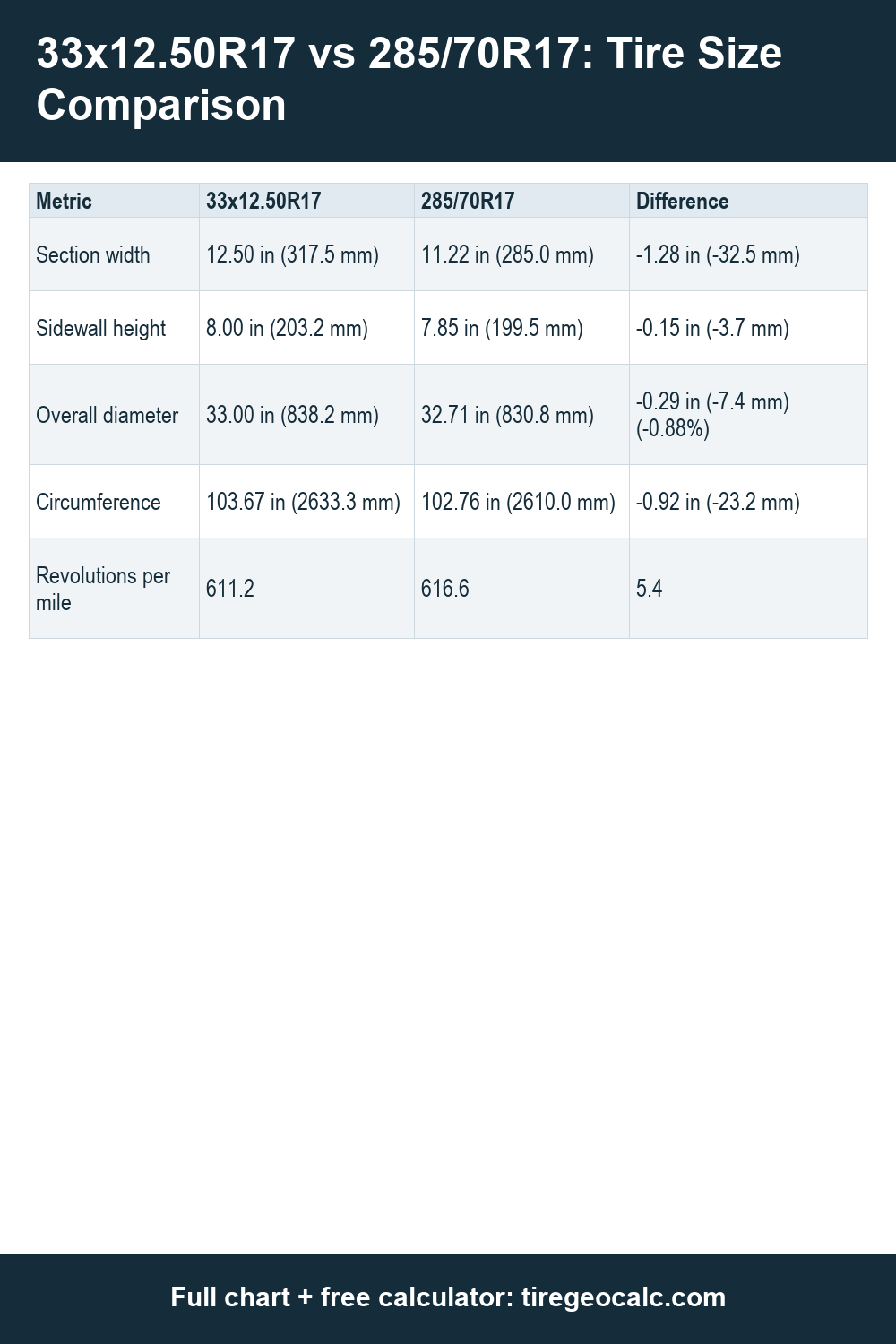
33x12.50R17 has a nominal diameter of 33.00 in (838.2 mm), while 285/70R17 is 32.71 in (830.8 mm). Moving from the first size to the second changes diameter by -0.88%. These are nominal geometric calculations, not vehicle fitment approval. Check the vehicle manual and exact tire and wheel specifications, including load and speed ratings, approved rim width and clearance; consult the manual for any diameter change exceeding 3%.
| Metric | 33x12.50R17 | 285/70R17 | Difference |
|---|---|---|---|
| Section width | 12.50 in (317.5 mm) | 11.22 in (285.0 mm) | -1.28 in (-32.5 mm) |
| Sidewall height | 8.00 in (203.2 mm) | 7.85 in (199.5 mm) | -0.15 in (-3.7 mm) |
| Overall diameter | 33.00 in (838.2 mm) | 32.71 in (830.8 mm) | -0.29 in (-7.4 mm) (-0.88%) |
| Circumference | 103.67 in (2633.3 mm) | 102.76 in (2610.0 mm) | -0.92 in (-23.2 mm) |
| Revolutions per mile | 611.2 | 616.6 | 5.4 |
Calculated dimensions
- Metric
- Section width
- 33x12.50R17
- 12.50 in (317.5 mm)
- 285/70R17
- 11.22 in (285.0 mm)
- Difference
- -1.28 in (-32.5 mm)
- Metric
- Sidewall height
- 33x12.50R17
- 8.00 in (203.2 mm)
- 285/70R17
- 7.85 in (199.5 mm)
- Difference
- -0.15 in (-3.7 mm)
- Metric
- Overall diameter
- 33x12.50R17
- 33.00 in (838.2 mm)
- 285/70R17
- 32.71 in (830.8 mm)
- Difference
- -0.29 in (-7.4 mm) (-0.88%)
- Metric
- Circumference
- 33x12.50R17
- 103.67 in (2633.3 mm)
- 285/70R17
- 102.76 in (2610.0 mm)
- Difference
- -0.92 in (-23.2 mm)
- Metric
- Revolutions per mile
- 33x12.50R17
- 611.2
- 285/70R17
- 616.6
- Difference
- 5.4
Speedometer effect: first size to second size
The reference calibration is 33x12.50R17; the replacement is 285/70R17. Differences always mean replacement minus original. The nominal speed change is -0.88%. With the original calibration retained, the speedometer would over-read after this change. Actual speed equals indicated speed multiplied by replacement diameter divided by original diameter.
| Indicated speed | Calculated actual speed | Actual minus indicated |
|---|---|---|
| 30 mph | 29.74 mph | -0.26 mph |
| 60 mph | 59.47 mph | -0.53 mph |
Calculated dimensions
- Indicated speed
- 30 mph
- Calculated actual speed
- 29.74 mph
- Actual minus indicated
- -0.26 mph
- Indicated speed
- 60 mph
- Calculated actual speed
- 59.47 mph
- Actual minus indicated
- -0.53 mph
A 33-inch label and a metric code describe different things
33x12.50R17 states overall diameter first, nominal section width second and wheel diameter last, all in inches. The engine converts the first value to millimeters and the second value to millimeters independently. In contrast, 285/70R17 begins with section width in millimeters, then gives sidewall height as a percentage of that width. The final wheel number still uses inches.
285/70R17 is approximately 32.7 inches tall, while 33x12.50R17 is nominally 33 inches. They are close in height, but not identical. The calculated change from the flotation reference to the metric candidate is -0.88%. Calling both sizes a thirty-three can hide that height difference and an even more obvious difference in width.
The width difference deserves its own check
The flotation section width is 12.50 in (317.5 mm), compared with 11.22 in (285.0 mm) for the metric size. A near match in overall diameter therefore is not a full conversion of the original dimensions. A replacement search should distinguish a similar-height option from a similar-width option. Those two goals do not necessarily identify the same metric code.
Both tires require a 17-inch bead seat, but that shared diameter says nothing about the approved wheel-width range for either exact product. Look up that range and its specified measuring rim. Sidewall bulge and published section width can vary with wheel width. The nominal difference here cannot by itself establish extra space beside the suspension, or freedom from rubbing at steering lock.
Work from the intended calibration direction
This page treats the nominal 33-inch flotation tire as original and the metric tire as replacement. The replacement is shorter, so its circumference is smaller and its calculated revolutions per mile are higher. A speedometer left calibrated for the flotation reference would over-read. If your vehicle currently uses the metric tire and you plan to install the flotation tire, reverse the inputs in the calculator.
The reverse percentage uses a different denominator, rather than merely changing the sign of the displayed percentage. Also distinguish the nominal model from measured rolling data. Tire construction, inflation, load and tread wear alter real rolling behavior. When an exact speed correction matters, use relevant manufacturer rolling specifications and the vehicle's actual calibration procedure instead of assuming the label is a road measurement.
Frequently asked questions
Is 285/70R17 exactly a 33-inch tire?
No. Its calculated diameter is 32.71 in (830.8 mm), approximately 32.7 inches. The shorthand grouping can be useful for browsing, but the complete size code is the input needed for a dimensional comparison. The nominal flotation diameter remains thirty-three inches by definition.
Does 12.50 mean a metric aspect ratio?
No. It is the flotation section width in inches. A flotation code directly supplies overall diameter, so sidewall height is half the difference between overall and wheel diameters. A metric code instead requires multiplying its width by the aspect percentage before calculating overall height.
Can the same wheel necessarily take both tires?
The bead-seat diameter agrees, but approved wheel width still needs checking against both exact tire specifications. Load capability, mounting requirements and clearance remain separate. Do not assume that a wheel currently carrying the narrower metric tire is approved for the wider flotation tire.
Will changing to the metric size reduce fuel use?
This geometry comparison cannot predict fuel consumption. Mass, tread design, construction and operating conditions matter alongside dimensions. A circumference change also affects the distance calculation when calibration is retained. Correcting a mileage reading is a different task from measuring whether actual fuel use changed.
Read how to convert an inch flotation tire size to metric for the conversion method. The 285/70R17 dimensions in inches guide gives another view of the metric candidate.
Sources and limits
All dimensions and speeds here come from this site's tire engine using the complete size codes, with rounding only for display. Circumference uses an ideal circle; revolutions per mile use that circumference. These are not manufacturer-measured rolling dimensions. For your own inputs, open the tire size calculator. Read the full disclaimer before making a replacement decision.
These are nominal geometric calculations, not vehicle fitment approval. Check the vehicle manual and exact tire and wheel specifications, including load and speed ratings, approved rim width and clearance; consult the manual for any diameter change exceeding 3%.
Reference tables: Load index chart and Speed rating chart.