 TireGeoCalc
275/70R18 vs 285/70R18: Sidewall, Diameter, Speed Compared
Quick answer
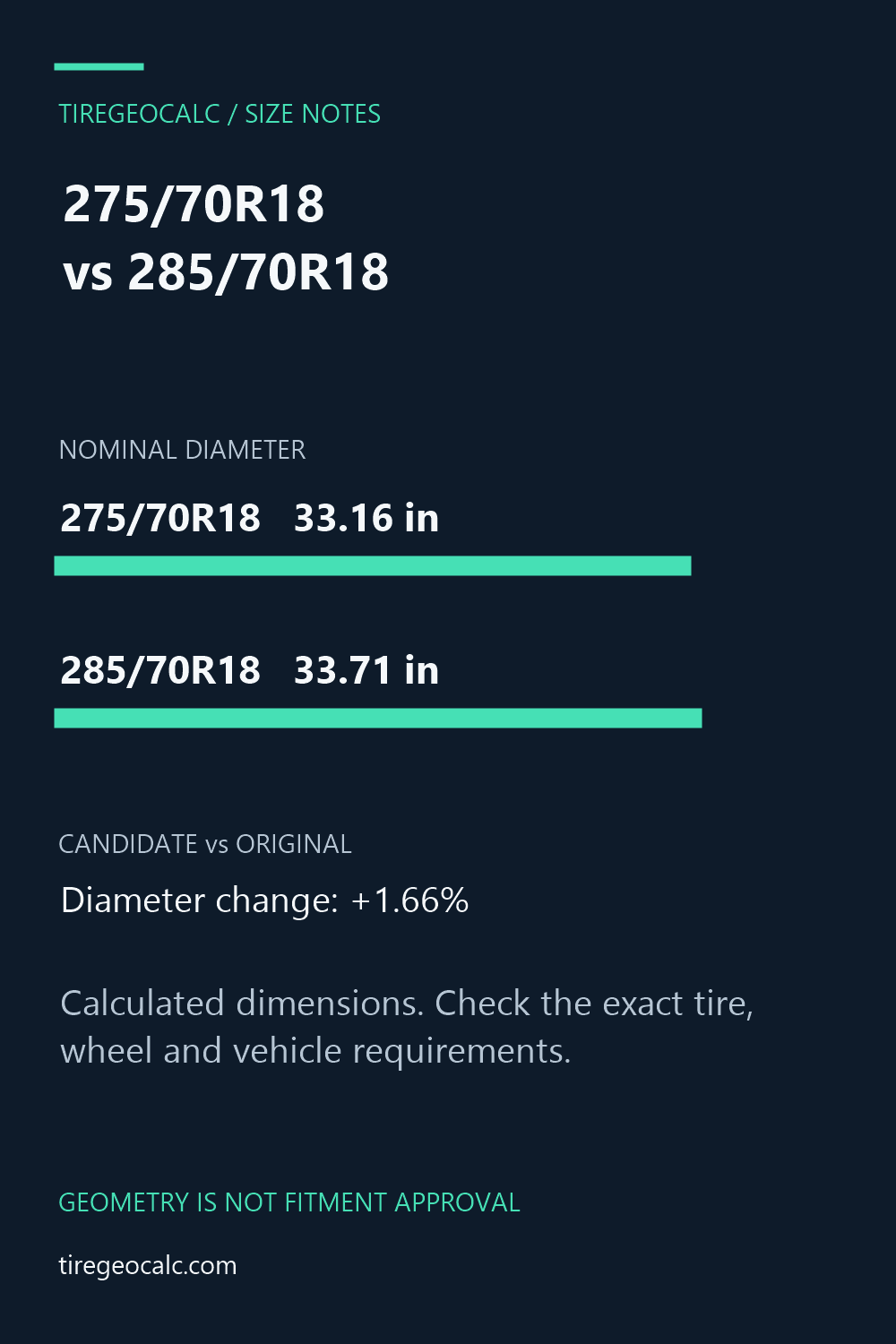
Nominal geometry275/70R18 → 285/70R18 · original-size calibration assumed
- Diameter difference
- +0.55in
- Diameter change
- +1.66%
- Actual at indicated 60 mph
- 61.00mph
Calculated from size markings. Not measured rolling dimensions or vehicle fitment approval.
Published
A move from 275/70R18 to 285/70R18 keeps the 18-inch wheel diameter marking and the 70 aspect ratio. The candidate is wider, and its sidewalls are taller because that ratio is applied to a larger width. Follow the original-to-candidate direction below to compare the dimensions without turning a small numerical difference into a fitment promise.
Nominal tire dimensions
The first size is the original reference. Values come from the tire geometry engine and are rounded only for display.
| Size | Width (in, mm) | Sidewall (in, mm) | Diameter (in, mm) | Circumference (in, mm) | Geometric rev/mile |
|---|---|---|---|---|---|
| 275/70R18 | 10.83 in (275.0 mm) | 7.58 in (192.5 mm) | 33.16 in (842.2 mm) | 104.17 in (2645.8 mm) | 608.3 |
| 285/70R18 | 11.22 in (285.0 mm) | 7.85 in (199.5 mm) | 33.71 in (856.2 mm) | 105.90 in (2689.8 mm) | 598.3 |
Calculated nominal dimensions, not measured rolling data or fitment approval.
- Size
- 275/70R18
- Width (in, mm)
- 10.83 in (275.0 mm)
- Sidewall (in, mm)
- 7.58 in (192.5 mm)
- Diameter (in, mm)
- 33.16 in (842.2 mm)
- Circumference (in, mm)
- 104.17 in (2645.8 mm)
- Geometric rev/mile
- 608.3
- Size
- 285/70R18
- Width (in, mm)
- 11.22 in (285.0 mm)
- Sidewall (in, mm)
- 7.85 in (199.5 mm)
- Diameter (in, mm)
- 33.71 in (856.2 mm)
- Circumference (in, mm)
- 105.90 in (2689.8 mm)
- Geometric rev/mile
- 598.3
Candidate minus original: diameter 0.55 in (14.0 mm) (1.66%); nominal radius 0.28 in (7.0 mm). Radius change is not a measured clearance gain.
| Indicated mph | Calculated actual mph |
|---|---|
| 30 | 30.50 |
| 60 | 61.00 |
| 75 | 76.25 |
Original calibration assumed; theoretical actual mph for the candidate.
- Indicated mph
- 30
- Calculated actual mph
- 30.50
- Indicated mph
- 60
- Calculated actual mph
- 61.00
- Indicated mph
- 75
- Calculated actual mph
- 76.25
Why the unchanged aspect ratio still changes height
The aspect ratio is a proportion, not a fixed sidewall height. In this pair, each sidewall is calculated as 70 percent of its tire's nominal section width. Increasing the section width therefore changes the sidewall even though the middle number stays the same. The wheel diameter remains constant, so the difference in overall height comes entirely from the two sidewalls.
This distinction is useful when a comparison sounds like only a width upgrade. Read the complete code first and then examine the diameter column. A width change at a fixed aspect ratio is also a height change. If you compare another pair with a different aspect ratio, start the calculation again rather than assuming that the same relationship or percentage will apply.
Compare diameter, circumference and revolutions together
Overall diameter includes the wheel and both sidewalls. Circumference is that diameter multiplied by pi. Geometric revolutions per mile are the distance in a mile divided by circumference, using consistent units. These columns are linked by the model, so a taller calculated tire has a longer circumference and fewer geometric revolutions over the same distance.
The table reports nominal dimensions, not a manufacturer's rolling data. Real product specifications may use a stated measuring wheel and other conditions that are not represented by the code alone. Use the calculated values to understand the direction and scale of a change, then obtain the exact specifications for the tire you are considering. Avoid mixing measured rolling figures with nominal circumference in the same ratio.
Interpret the speed row without promising instrument accuracy
For the candidate row, the engine takes the original 275/70R18 diameter as its reference. It multiplies an indicated speed by the new-to-original diameter ratio. The table shows that theoretical result at several indicated speeds. This keeps the comparison tied to the same starting size instead of treating every speedometer as if it were calibrated identically.
If the instrument has already been recalibrated, this original-size calculation no longer describes that calibration. Nor does a close diameter ratio prove the speedometer reading is accurate. Actual instrument behavior is a separate measurement. Keep the chart with your size notes and distinguish the model's assumptions from any observed readings you collect later.
Do not turn radius change into a clearance guarantee
Half the diameter difference is the change in nominal radius. That is a useful geometric quantity because it separates total height from distance out from the center. It is not a prediction of usable clearance, and it does not say how a particular vehicle will sit under load. This page has no vehicle measurements or suspension information from which to calculate those outcomes.
Section width is also nominal. It should not be read as tread width, nor should its difference be divided into a guaranteed amount of extra room on each side of the wheel. Wheel width and offset, the exact tire shape and the surrounding hardware are separate inputs. A comparison can organize those questions; the size code cannot answer them all.
Make the purchase decision from complete specifications
Use the tire size required by the vehicle as your starting reference. Then check whether the exact candidate tire and wheel combination meets the vehicle and manufacturer requirements. Include load and speed ratings, wheel specifications and any restrictions in the relevant documentation. Matching construction letters and wheel diameter markings are only part of that review.
The links provided are product searches so you can look up exact models; they do not certify stock, price or suitability. Geometry does not supply operating pressure, fuel consumption, carrying capacity or ride predictions. Keep those claims out of the size comparison. If documentation does not resolve the choice, ask a qualified installer to inspect the actual combination before installation.
Frequently asked questions
Is 285/70R18 wider than 275/70R18?
Its nominal section width is larger. Section width is not a measured tread-width specification.
Why does the height change if both say 70?
The 70 is a percentage of width, so applying it to a wider tire produces a taller sidewall.
Will the larger size clear my vehicle?
This chart does not establish clearance. That requires the exact tire, wheel and vehicle information and an installation assessment.
Can this table predict MPG?
No. It calculates nominal geometry and a theoretical speed ratio, not fuel consumption.
Continue your research
Nominal geometry does not establish vehicle fitment. Check the exact tire, wheel and vehicle documentation before installation.
Reference tables: Load index chart and Speed rating chart.