 TireGeoCalc
235/55R19 vs 255/55R19: Width, Height and Speedometer Change
Quick answer
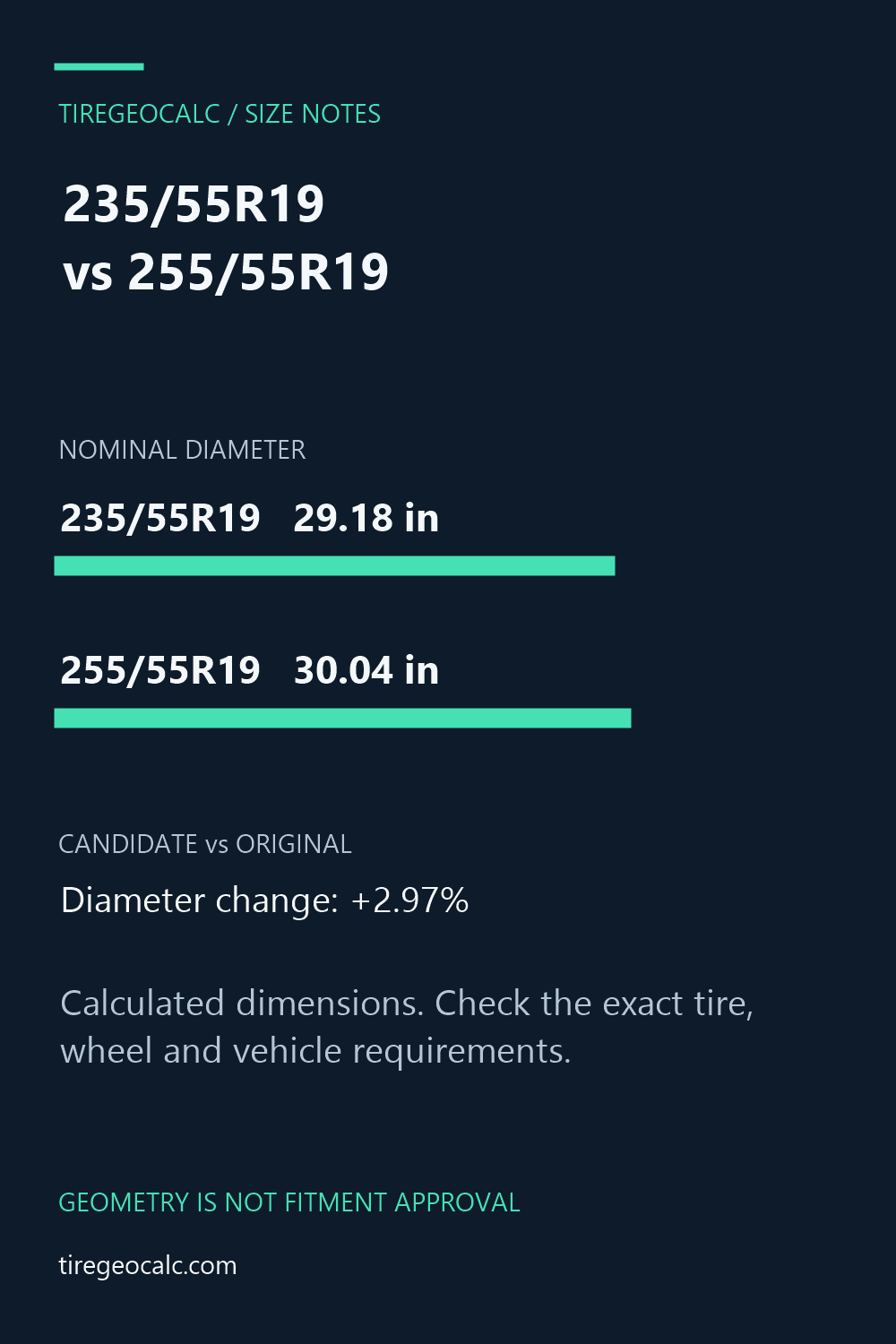
Nominal geometry235/55R19 → 255/55R19 · original-size calibration assumed
- Diameter difference
- +0.87in
- Diameter change
- +2.97%
- Actual at indicated 60 mph
- 61.78mph
Calculated from size markings. Not measured rolling dimensions or vehicle fitment approval.
Published
The change from 235/55R19 to 255/55R19 adds nominal width and also increases overall height. Sharing a wheel diameter and an aspect ratio does not make these two sizes interchangeable. This guide treats 235/55R19 as the original reference and 255/55R19 as a candidate, so the percentage and speed calculations always have a clear direction.
Nominal tire dimensions
The first size is the original reference. Values come from the tire geometry engine and are rounded only for display.
| Size | Width (in, mm) | Sidewall (in, mm) | Diameter (in, mm) | Circumference (in, mm) | Geometric rev/mile |
|---|---|---|---|---|---|
| 235/55R19 | 9.25 in (235.0 mm) | 5.09 in (129.3 mm) | 29.18 in (741.1 mm) | 91.66 in (2328.2 mm) | 691.2 |
| 255/55R19 | 10.04 in (255.0 mm) | 5.52 in (140.3 mm) | 30.04 in (763.1 mm) | 94.38 in (2397.3 mm) | 671.3 |
Calculated nominal dimensions, not measured rolling data or fitment approval.
- Size
- 235/55R19
- Width (in, mm)
- 9.25 in (235.0 mm)
- Sidewall (in, mm)
- 5.09 in (129.3 mm)
- Diameter (in, mm)
- 29.18 in (741.1 mm)
- Circumference (in, mm)
- 91.66 in (2328.2 mm)
- Geometric rev/mile
- 691.2
- Size
- 255/55R19
- Width (in, mm)
- 10.04 in (255.0 mm)
- Sidewall (in, mm)
- 5.52 in (140.3 mm)
- Diameter (in, mm)
- 30.04 in (763.1 mm)
- Circumference (in, mm)
- 94.38 in (2397.3 mm)
- Geometric rev/mile
- 671.3
Candidate minus original: diameter 0.87 in (22.0 mm) (2.97%); nominal radius 0.43 in (11.0 mm). Radius change is not a measured clearance gain.
| Indicated mph | Calculated actual mph |
|---|---|
| 30 | 30.89 |
| 60 | 61.78 |
| 75 | 77.23 |
Original calibration assumed; theoretical actual mph for the candidate.
- Indicated mph
- 30
- Calculated actual mph
- 30.89
- Indicated mph
- 60
- Calculated actual mph
- 61.78
- Indicated mph
- 75
- Calculated actual mph
- 77.23
Read the matching numbers before comparing the differences
Both size codes end in R19. That identifies radial construction and a wheel diameter of 19 inches; it does not identify the wheel width or establish whether either tire is approved for a particular wheel. The first number is nominal section width in millimeters. It is not a measurement of the tread touching the road. Read it as one part of the complete size rather than as a product specification.
The middle number is 55 in both cases. It expresses one sidewall as a percentage of section width. Because the candidate is wider, the same percentage produces a taller sidewall. A comparison that checks only the final wheel number misses that increase. The table keeps width, sidewall and overall diameter in separate columns so you can see which dimension changes and why.
Build overall diameter from the sidewall
The engine multiplies width by aspect ratio divided by 100 to obtain one sidewall. It then converts the wheel diameter to millimeters and adds two sidewalls. For this pair, the width increase contributes to both sidewalls, not just the lower half of the tire. Read the calculated diameter difference as an increase across the whole assembly, and the radius difference as half of that amount.
Neither number is a prediction of clearance on your vehicle. The radius calculation describes an ideal unloaded circle. It does not include body shape, suspension movement or the location of the wheel within the wheel opening. Use the comparison to describe a candidate accurately before looking for the separate documentation needed to assess installation.
Keep the speedometer comparison in the stated direction
The speed table assumes the vehicle still uses its original size calibration. At the same counted revolutions, a larger nominal circumference corresponds to more distance. The theoretical actual speed is the indicated speed multiplied by candidate diameter divided by original diameter. That is why the candidate row has a different result even though the wheel diameter marking stays the same.
Use the original tire as the denominator throughout the comparison. Reversing the order creates a different percentage, so do not copy an increase from one direction and call it the decrease in the other. A recalibrated instrument also needs its own reference. These results describe the size ratio only; they do not measure the accuracy of an individual speedometer.
Separate the wider section from the taller assembly
A wider nominal section and a larger radius describe different directions. The section-width difference cannot tell you how the added width would divide between the inner and outer sides after a wheel change. The diameter difference cannot tell you whether there is sufficient space at steering lock. Those questions depend on details absent from the size markings and from this geometry calculation.
Record the complete wheel information and exact tire model when you move beyond the chart. Check the vehicle documentation and the tire manufacturer's specifications, including the approved wheel-width range, load and speed requirements. The matching R19 marking is a useful observation, but it is not an approval to reuse a wheel or replace the vehicle's specified tire size.
Use the chart as a shortlist, then check the product
Start by writing down the original size from the vehicle documentation. Compare it with the candidate in the calculator and save the direction of the comparison with your notes. Next, consult the exact product specifications rather than treating calculated dimensions as measured dimensions. Brand, construction and measuring conditions are outside the nominal model used here.
The shopping links below are searches, not statements that a suitable product is available or approved. This page does not calculate operating pressure, load capacity, ride quality or fuel use from geometry. If the vehicle, tire or wheel documentation leaves a fitment question unresolved, take the complete information to a qualified installer before buying.
Frequently asked questions
Are these tires the same height?
No. With the same aspect ratio, the wider nominal section produces taller sidewalls and a larger calculated diameter.
Does R19 mean they fit the same wheel?
It specifies the wheel diameter only. The approved wheel-width range and exact wheel specifications still need separate checks.
Which tire is the baseline?
235/55R19 is the original reference throughout this page. The speed ratio compares 255/55R19 against that reference.
Are the listed revolutions measured?
No. They are geometric revolutions per mile computed from nominal circumference, not loaded rolling measurements.
Continue your research
Nominal geometry does not establish vehicle fitment. Check the exact tire, wheel and vehicle documentation before installation.
Verified against manufacturer data
Published specifications for the named models, checked on the dates below. Differences mean published minus calculated, divided by calculated. These are examples, not specifications for every tire of this size. P, LT and XL designations remain in the source row; matching nominal dimensions does not make their load capacities interchangeable.
| Size / model | Calculated diameter | Published diameter | Difference | Revolutions per mile: calculated / published (difference) | Source / checked |
|---|---|---|---|---|---|
| 235/55R19101H ToyoExtensa A/S II (147210) | 29.18 in | 29.20 in | +0.08% | 691.2 / not recorded in rev/mile | Toyo specifications |
| 235/55 R 19105V XL General TireAltiMAX RT45 (15577540000) | 29.18 in | 29.20 in | +0.08% | 691.2 / 712 (+3.00%) | General Tire specifications |
How we calculate: nominal geometry and measured rolling data can differ. This comparison is not vehicle fitment approval.