TireGeoCalc
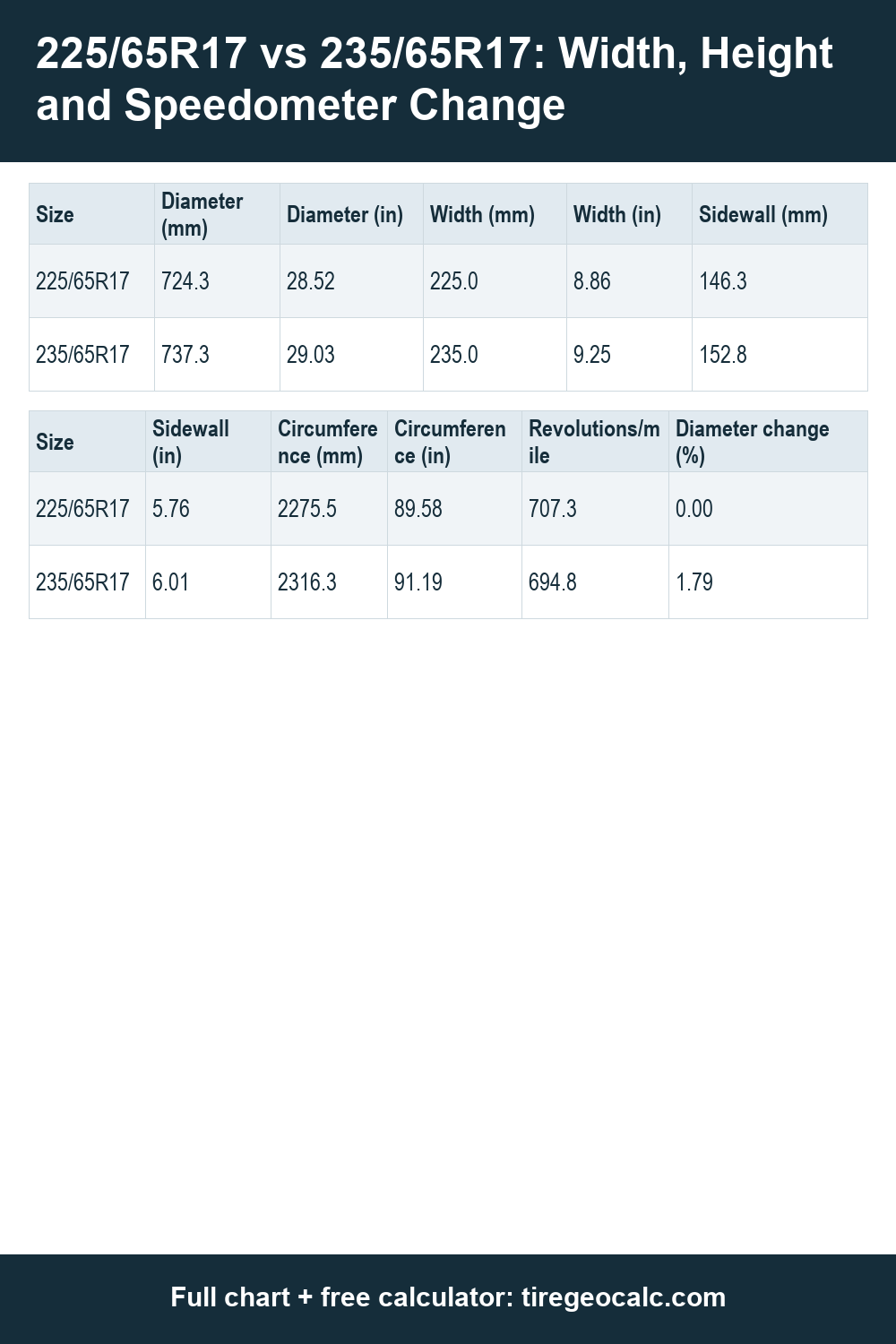
Two tire sizes can look almost the same on a quote, yet their numbers do different jobs. This page compares 225/65R17 with 235/65R17 using nominal geometry only. The first number is the section width in millimeters, the second is the aspect ratio, and the R17 part names the rim diameter in inches. Because the ratio stays at 65 while the width goes up by 10 mm, the sidewall grows as well. That is the main idea to hold on to. Below you will find the width, sidewall height, overall diameter, circumference and revolutions per mile for both sizes, a worked speedometer example, and a plain explanation of what this math can and cannot tell you. All figures come from the comparison table on this page, and the 225/65R17 size is the baseline.
Read these exact size markings
Start with the marking 225/65R17. The 225 is the nominal section width in millimeters. The 65 is the aspect ratio, which means the sidewall height is 65 percent of the width. The R means radial construction, and 17 is the wheel diameter in inches. The second size, 235/65R17, keeps the same ratio and the same 17 inch rim. Only the width changes, from 225 to 235.
That single change matters more than it looks. When the ratio is fixed, a wider tire gets a taller sidewall automatically, because the sidewall is a percentage of the width. In the table, the 225/65R17 sidewall is 146.3 mm and the 235/65R17 sidewall is 152.8 mm. The rim stays at 431.8 mm for both, since both use a 17 inch wheel. So the rim part of the stack does not move, and the sidewall part does.
Work through this page's numerical example
Here is the example with the exact numbers from the table. The 225/65R17 tire has a width of 225 mm and a sidewall of 146.3 mm. Its overall diameter is 724.3 mm, which is 28.52 inches, and its circumference is 2275.5 mm, or 89.58 inches. It turns 707.3 times per mile, or 439.5 times per kilometer.
Now the 235/65R17 tire. Its width is 235 mm and its sidewall is 152.8 mm. Its overall diameter is 737.3 mm, which is 29.03 inches, and its circumference is 2316.3 mm, or 91.19 inches. It turns 694.8 times per mile, or 431.7 times per kilometer. The table lists the diameter difference as 1.79 percent, with the 225/65R17 size as the starting point. The direction matters: the wider size is the larger one, so it covers more ground in each turn and needs fewer turns per mile.
Explain the practical geometry difference
It helps to separate total height from radius. Total height, or overall diameter, is the full distance from the ground up through the center of the wheel to the top of the tire. The radius is the distance from the center to the ground, which is the diameter taken one side at a time. When people say a tire is taller, they usually mean the overall diameter. The table gives diameter directly, so you can read it without extra steps.
The sidewall is only one piece of that diameter. Each side of the wheel carries a sidewall, and the rim sits in the middle. That is why a sidewall that grows from 146.3 mm to 152.8 mm shows up in the overall diameter as a larger step than the sidewall number alone suggests. The diameter grows from 724.3 mm to 737.3 mm. A larger circumference follows from a larger diameter, and a larger circumference means fewer revolutions for the same distance, which is why the revolutions per mile figure drops from 707.3 to 694.8.
Understand the speedometer change
Most speedometers count wheel turns and assume the original tire size. If the new tire is larger, each turn covers more road, so the real speed is higher than the number on the dial. The table shows this for the 235/65R17 size. When the dial reads 30 mph, the real speed is 30.5 mph. When the dial reads 60 mph, the real speed is 61.1 mph. When the dial reads 75 mph, the real speed is 76.3 mph.
These values assume the speedometer was calibrated for the 225/65R17 size. If your vehicle was set up for a different size, the starting point is different, and these numbers do not apply. The values also come from nominal geometry, so they are a guide to the direction and rough size of the change, not a measured result from any vehicle.
Understand nominal dimensions and rounding
Every number on this page is nominal. That means it comes from the printed size markings and simple geometry, not from a tire sitting on a vehicle. A real tire changes shape under load, wears down over time, and varies a little between makers and models. A measured rolling circumference can differ from the nominal one for all of those reasons.
Rounding is only for display. The table keeps the full precision behind each figure and rounds at the end, so the sidewall of 152.75 mm appears as 152.8 mm and the speed of 61.0769 mph appears as 61.1 mph. If you repeat the math by hand with rounded inputs, you may land a little away from the table. That small gap is a rounding effect, not an error in the page.
Check what the calculation cannot decide
A similar diameter is not approval for your vehicle. This comparison does not tell you whether a size will mount on your wheel, clear the suspension and fender, or match what the maker allows. It also does not tell you the right inflation pressure, the load capacity, the ride comfort or the fuel use. Those depend on the vehicle, the wheel, the tire model and the rating printed on the tire.
Use the numbers here to understand the geometry and to see how far the speedometer reading may drift. Then check the vehicle placard, the owner manual and the guidance of a qualified tire professional before you make a choice. The table answers the geometry question only.